These are some of the baking questions I get asked most often! From measuring ingredients to getting the right butter temperature, I've gathered my go-to tips below to help your baked goods turn out just right.
Baking Sheets:
Dark or non-stick pans can brown cookie bottoms faster than light-colored aluminum pans. I bake on a light-colored aluminum sheet lined with parchment paper, on the middle oven rack.
Oven Temperature:
I always use an oven thermometer to check that my oven has reached the correct temperature before baking. Oven settings aren't always accurate, and even a small temperature difference can affect how much cookies spread, how quickly they bake, and their final texture.
Kitchen Scale:
Measuring flour with cups can be inconsistent, and adding too much flour can lead to dry, crumbly cookies, heavy, dense muffins, or just simply a baked good that doesn't turn out just right. I recommend using a digital kitchen scale for the most accurate results. For all my recipes, 1 cup of all-purpose flour equals 125 grams.
Weighing Butter:
Don't assume every vegan butter stick weighs exactly what the package says. I've weighed sticks labeled 113 grams that came in as low as 98 grams! For consistent cookies, use a kitchen scale to measure your butter rather than relying on the wrapper markings.
Room Temperature Yogurt Rule:
Make sure your vegan yogurt is at room temperature before adding it to the melted and cooled butter. Cold yogurt can cause melted vegan butter to firm up into little clumps, making the mixture look curdled or separated. Adding cold yogurt to butter that's still hot can also cause problems with the mixture. For the smoothest dough, let the butter cool first and bring your yogurt to room temperature. I like plain, unsweetened So Delicious Coconut, Silk Almond, or Forager Cashew yogurt.
Butter Temperature:
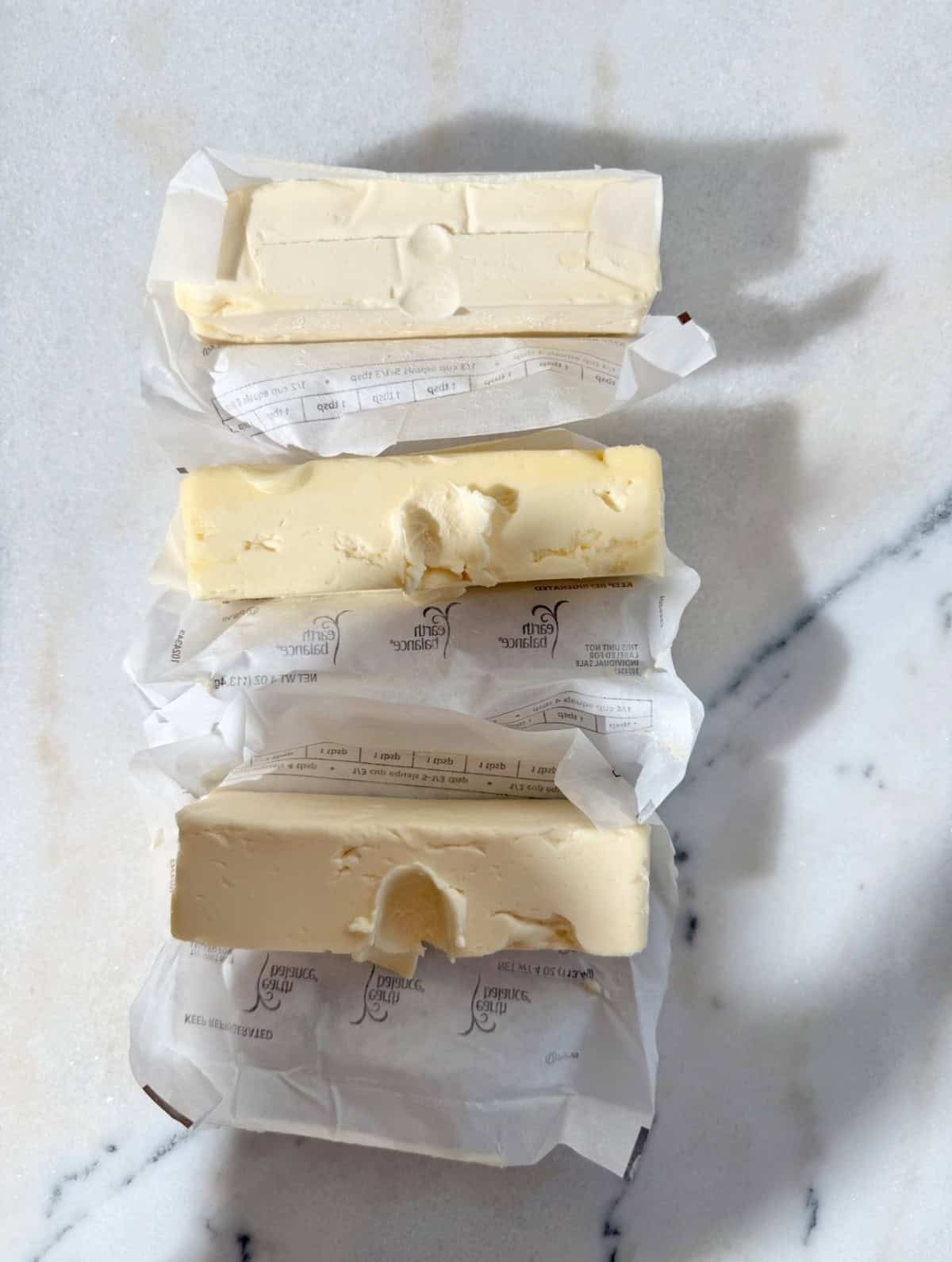
Butter temperature matters more than you might think! Always use the temperature called for in the recipe. Melted butter should be cooled before mixing, and cold butter means straight from the refrigerator. When a recipe calls for room-temperature butter, I aim for around 65-67°F. It should still feel firm but leave a slight indentation when pressed with your finger. If your finger sinks right in, the butter is too soft. If you can barely make an indentation, it's still too cold. See the photo below for a comparison.